
A close-up, photographic realistic scene of a modern, minimalist conference table in muted gray tones, set with open laptops displaying abstract charts and maps of Ukraine, but with screens blurred enough to avoid readable text. Between the devices lies a central, detailed printed map of Ukraine on matte paper, annotated with precise, color-neutral boundary lines and shaded regions indicating differing control without sensationalism. Cool, balanced overhead lighting reflects softly off the brushed metal table legs, creating a calm, professional atmosphere. Shot at eye level with a shallow depth of field, the focus rests on the map’s central region while the background fades into a soft bokeh of indistinct office walls and glass partitions, evoking structured, methodical mediation work.

Project Overview

Dissertation research tracing mediation faultlines in Ukraine’s conflict, methods, and findings from 2014–2022.

Publications

Research Agenda: Mediation in Ukraine

This project investigates how mediation operated in Ukraine’s 2014–2022 warscape, asking when, why, and for whom it constrained or enabled conflict.
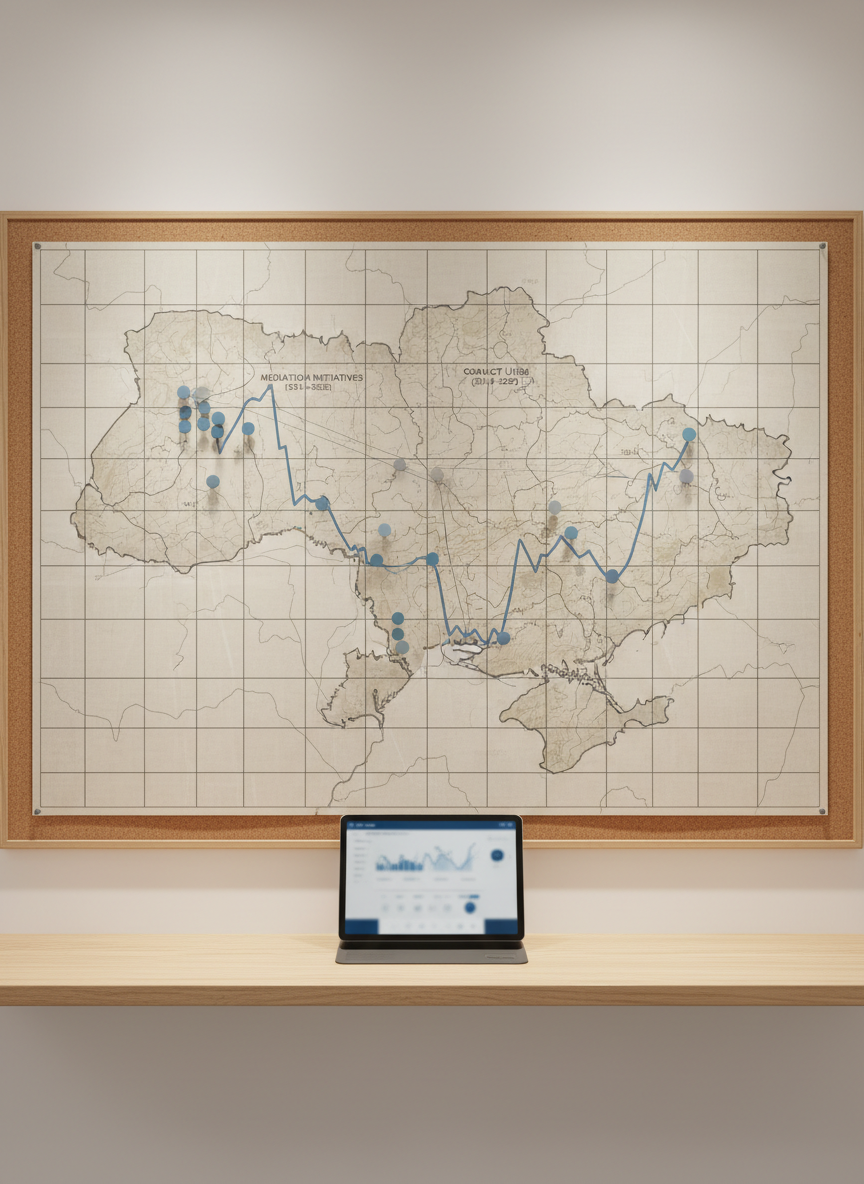
An overhead, photographic realistic view of a large, neutral-toned wall map of Ukraine pinned to a corkboard, covered by a transparent acrylic grid overlay. Small, simple markers in muted blues and grays indicate mediation initiatives and contact lines between 2014 and 2022, arranged without dramatic symbols. To one side, a sleek digital tablet lies on a light wooden shelf beneath the board, showing a softly blurred interface of graphs and timelines. Soft, indirect ceiling lighting creates gentle, uniform illumination with minimal shadows, reinforcing a calm, analytical mood. The composition is clean and balanced, conveying a sense of systematic study of conflict dynamics and mediation processes while avoiding any sensational or promotional feel.
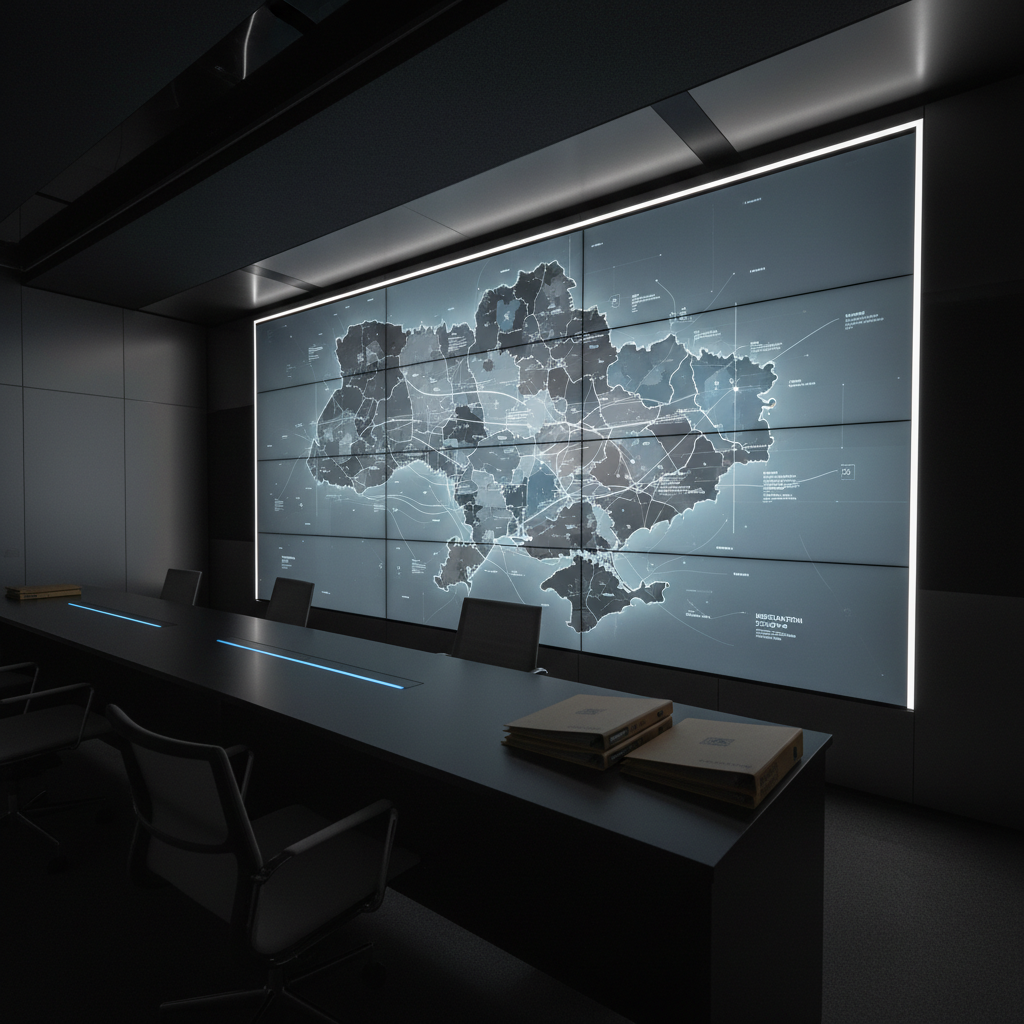
A dimly lit, photographic realistic situation room-style interior with a large digital display wall showing an abstracted, desaturated map of Ukraine divided into regions, overlaid with faint, translucent data layers representing mediation efforts across years. The map’s details are sharp, but any text or numbers are intentionally unreadable. Below, a minimalist console desk holds neatly stacked briefing folders and a single glowing indicator strip that casts a soft, cool reflection across a matte black surface. Subtle edge lighting around the map creates a focused, contemplative atmosphere. Shot from a low, slightly oblique angle, the composition emphasizes the scale of the analytical tools and evokes high-level, evidence-based assessment of Ukraine’s conflict and mediation landscape.
A meticulously organized research desk featuring a large, open archival binder with printed documents about Ukraine mediation, their text intentionally out of focus, beside a detailed grayscale map of eastern Ukraine highlighted with translucent overlay sheets. A slim, stainless-steel pen rests along a margin, and several labeled tabs stick out, suggesting years from 2014 to 2022 without legible wording. Diffused overcast light from an unseen window creates soft, even illumination, emphasizing textures of paper and matte cardboard. Photographic realism with a slightly elevated, three-quarter angle captures the entire workspace, while the background shows a faintly blurred row of neutral-toned storage boxes, contributing to a disciplined, research-lab atmosphere and serious, credible tone.