
A close-up, photographic realistic scene of a modern, minimalist conference table in muted gray tones, set with open laptops displaying abstract charts and maps of Ukraine, but with screens blurred enough to avoid readable text. Between the devices lies a central, detailed printed map of Ukraine on matte paper, annotated with precise, color-neutral boundary lines and shaded regions indicating differing control without sensationalism. Cool, balanced overhead lighting reflects softly off the brushed metal table legs, creating a calm, professional atmosphere. Shot at eye level with a shallow depth of field, the focus rests on the map’s central region while the background fades into a soft bokeh of indistinct office walls and glass partitions, evoking structured, methodical mediation work.

Research Methods

Technical overview of data collection, coding decisions, and analytic choices underpinning the Ukraine mediation study.

Offerings
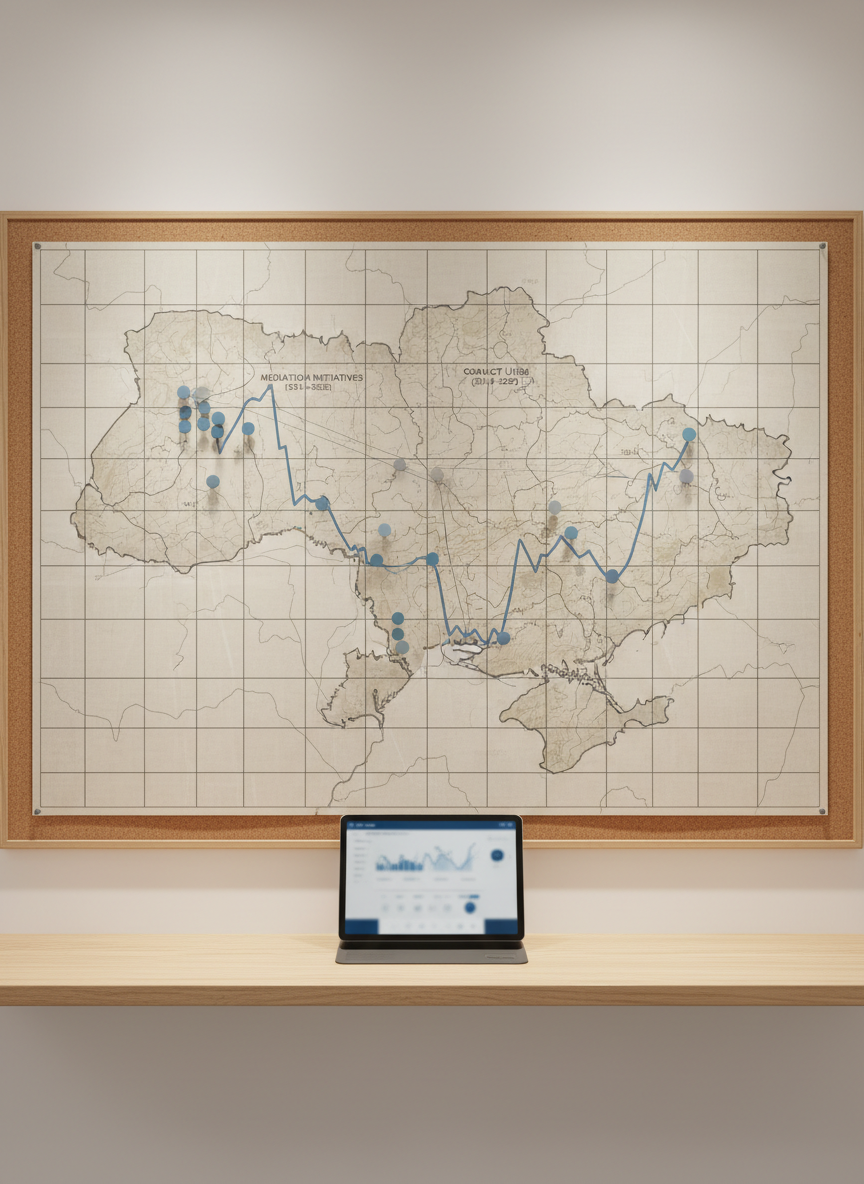
An overhead, photographic realistic view of a large, neutral-toned wall map of Ukraine pinned to a corkboard, covered by a transparent acrylic grid overlay. Small, simple markers in muted blues and grays indicate mediation initiatives and contact lines between 2014 and 2022, arranged without dramatic symbols. To one side, a sleek digital tablet lies on a light wooden shelf beneath the board, showing a softly blurred interface of graphs and timelines. Soft, indirect ceiling lighting creates gentle, uniform illumination with minimal shadows, reinforcing a calm, analytical mood. The composition is clean and balanced, conveying a sense of systematic study of conflict dynamics and mediation processes while avoiding any sensational or promotional feel.

Guest lectures, workshops, and tailored briefings on Ukraine’s mediation faultlines for universities, think tanks, and policy programs.
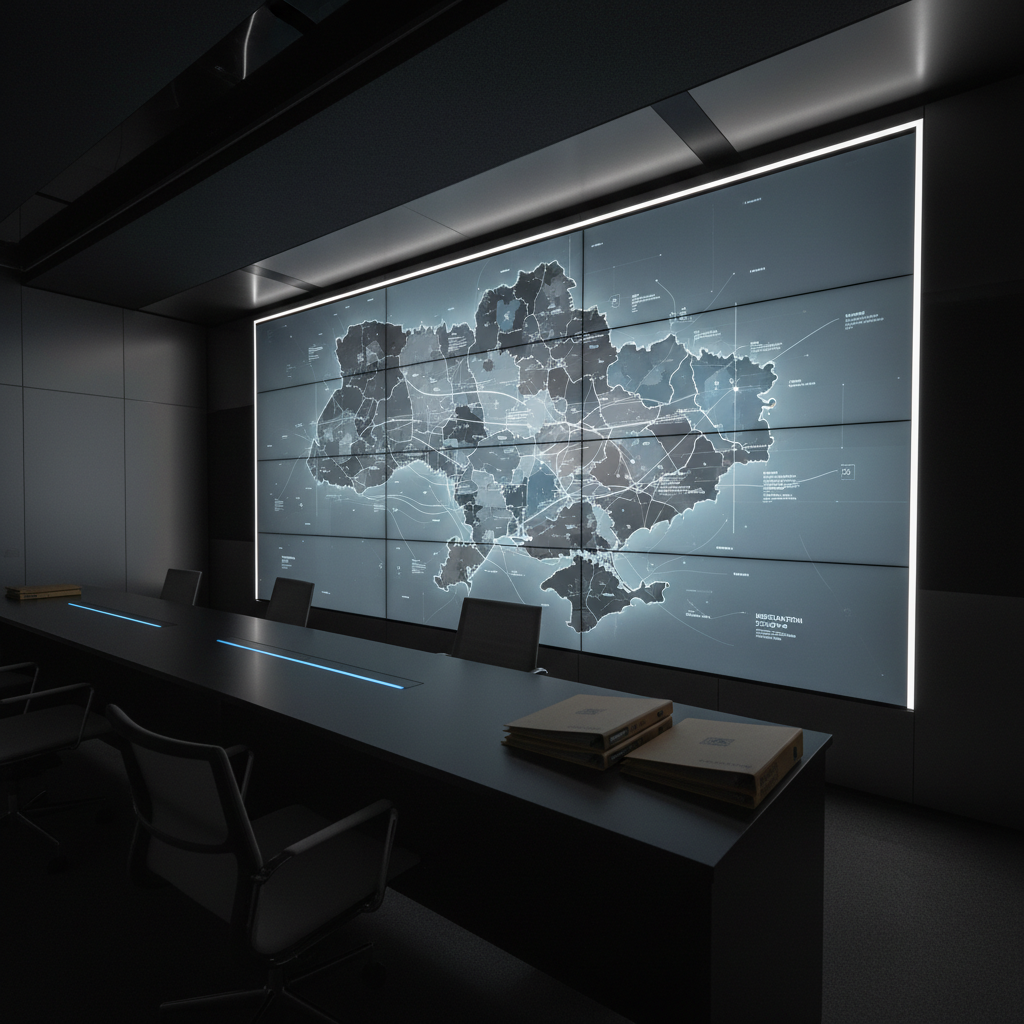
A dimly lit, photographic realistic situation room-style interior with a large digital display wall showing an abstracted, desaturated map of Ukraine divided into regions, overlaid with faint, translucent data layers representing mediation efforts across years. The map’s details are sharp, but any text or numbers are intentionally unreadable. Below, a minimalist console desk holds neatly stacked briefing folders and a single glowing indicator strip that casts a soft, cool reflection across a matte black surface. Subtle edge lighting around the map creates a focused, contemplative atmosphere. Shot from a low, slightly oblique angle, the composition emphasizes the scale of the analytical tools and evokes high-level, evidence-based assessment of Ukraine’s conflict and mediation landscape.

Collaborate on curriculum design, case studies, and simulation exercises grounded in empirical data from Ukraine’s mediation processes.

About

How This Research Was Done

This page details the qualitative design, document corpus, and interview material informing the Gray Zone Mediation project. It explains sampling choices, coding procedures, and strategies for tracing mediation “faultlines” across cases. Readers will also find reflections on researcher positionality, ethical safeguards, and the limits of generalisation, supporting transparent, reproducible, and teachable conflict-research practice.